


 English
 Español
 عربى
عربىAs construction and industrial manufacturing sectors continue to advance, the industrial packaging standards for cement and various powder materials are constantly upgraded. In this landscape, professional valve bag manufacturers deliver tailored packaging solutions that excel in high-efficiency filling, stable storage, and safe long-distance transportation, fully meeting the rigorous demands of heavy-duty industrial scenarios. Meanwhile, the flexible design concepts applied in food soft packaging have also been extended to industrial packaging fields, driving continuous improvements in dust prevention, sealing performance and overall packaging reliability for powder materials.
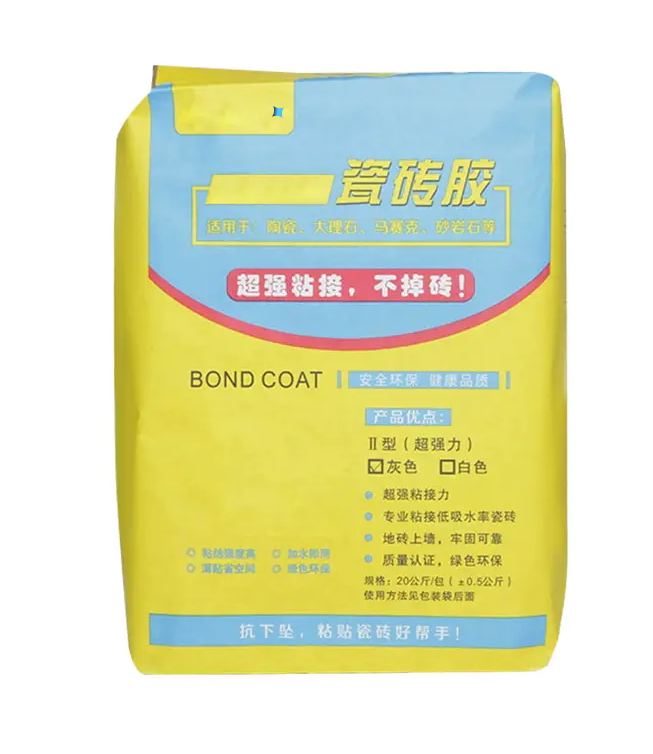
Booming Market Demand for Cement Valve Bag Packaging
Cement is a typical fine-particle industrial material, whose packaging process requires compatibility with high-speed filling production lines while effectively preventing fine powder leakage. Valve bags have become the mainstream packaging choice for the cement industry by virtue of their unique spout structure and standardized design. The dedicated filling spout enables quantitative and controlled material loading, greatly reducing powder spillage and waste during filling, handling and transshipment.
Massive and continuous production is a typical feature of the cement industry. Uniform and standardized valve bag packaging ensures stable operation of automated packaging lines, effectively improving overall production efficiency. In addition, the structural stability of filled valve bags guarantees neat stacking in warehouses and intact packaging during long-distance logistics and transportation, avoiding product loss and packaging damage caused by extrusion and shaking.
Core Packaging Requirements for Industrial Powder Materials
In addition to cement, a wide range of industrial powder materials, including mineral compounds, construction additives and industrial fillers, also depend heavily on high-quality valve bag packaging. Most fine powder materials are prone to flying and floating when exposed to the air, which not only causes product waste but also triggers potential safety and environmental risks. Therefore, dust control and packaging tightness are the core indicators of powder material packaging solutions.
Professionally designed valve bags effectively isolate powder materials from the external environment, minimizing dust generation during filling, material transfer and storage. To adapt to the diverse characteristics of different powder products, manufacturers adopt customized inner and outer layer material combinations. For moisture-prone powders, high-moisture-resistance materials are selected; for materials requiring air permeability, targeted breathable structures are applied; for large-scale industrial distribution, cost-effective packaging solutions are prioritized to balance performance and economic benefits.
Diversified Structural Designs and Professional Material Selection
Valve bags are mainly manufactured with three mainstream structures: pure paper layers, woven polypropylene and multi-layer composite materials, with each type matching distinct industrial application scenarios. Paper-based valve bags are ideal for packaging dry industrial powders, featuring clean packaging effects and good environmental adaptability. Woven polypropylene valve bags boast tensile and tear resistance, suitable for heavy-load packaging and harsh transportation environments. Multi-layer composite structures integrate the advantages of multiple materials, achieving comprehensive upgrades in moisture resistance, air tightness and load-bearing capacity.
The design of valve openings is also highly customizable, matching different types of industrial filling equipment. It adapts to two mainstream filling modes: internal pressure filling and mechanical insertion filling. The differentiated structural design ensures that the valve bags are perfectly compatible with automated production equipment, effectively improving filling accuracy and production efficiency for end users.
Standardized Manufacturing Process and Quality Control
The production and manufacturing of high-quality valve bags follows a standardized process, covering material lamination, integral bag forming, precision valve installation and seamless edge sealing. Strict quality control runs through the entire production process to ensure that each batch of valve bags maintains stable structural shape, no deformation or cracking during high-speed filling and heavy-load transportation.
Manufacturers also provide personalized surface printing and special surface treatment services according to customer branding and product identification needs. In the production process, key indicators such as material thickness, air permeability and load-bearing performance are strictly tested to ensure that the finished bags fully adapt to industrial production systems, reduce equipment failure and production interruption, and support continuous and efficient industrial production.
Continuous Industry Expansion and Innovative Application Trends
While cement packaging remains the core application scenario of valve bags, their application scope is constantly expanding to downstream powder industries, including chemical processing, new construction materials, mineral products and other fields. The strong structural adaptability and customizable performance of valve bags make them the preferred packaging solution for diversified powder material packaging needs.
Furthermore, the mature technologies of soft food packaging in sealing precision, anti-contamination and flexible material application have provided valuable references for industrial packaging innovation. Though food packaging and industrial powder packaging differ in application environments and performance parameters, the core design concepts of high sealing, high safety and high adaptability are universally applicable, further promoting the iterative upgrade of valve bag packaging technology.
In summary, customized valve bag packaging solutions have fully covered the packaging needs of cement and various industrial powder materials. Driven by the continuous upgrading of industrial production and logistics standards, the optimization of valve bag structure and innovative selection of packaging materials will remain the core of industrial packaging development, continuously improving packaging efficiency, product safety and supply chain stability for powder material enterprises.